Social Media Marketing
There are 5.18 billion+ global internet users – 92% use social media.
ARE YOU MISSING THEIR BUSINESS?


The #1 social media platform in the world

Let photos and videos tell your brand’s story

The perfect marketing platform for B2Bs

And More!
New platforms are popping up every day—and we’re ready.
Social Media Marketing (SMM)
Organic and Paid Social Media Marketing promotes your products, services, or brands through social media platforms such as Facebook, Twitter, Instagram, LinkedIn, and more. Social media exposure not only drives brand recognition but is also beneficial to site SEO:
- Increases website traffic through social referrals
- Amplifies content visibility and reach
- Fosters natural link-building
Positive social engagement metrics also indirectly influence search engine ranking algorithms, making a cohesive social media strategy vital for comprehensive digital marketing efforts.
Be in the right place,
at the right time,
with the right message.
Pretend you own a business that sells hot tubs. Your typical customer’s path from an idea to a purchase might look something like this:

Of course, not everyone’s buying process looks like this. Purchasing style and the type of product may be different, but typically, a person has an idea, does some research, looks at products, and finally makes a purchase.

Through marketing, a business owner can meet Linda at each stage in her journey from Idea to Buy. A website helps with a lot of this. Standard methods of marketing like print, radio, and television can help, too.
SMM Knows Where Users Are in Their Journey
But social media presents an opportunity to do, until the last decade or so, was nearly impossible – marketing to your audience by already knowing where they are in this journey. It’s all about being in the right place, at the right time, with the right message.
Let’s walk through Linda’s journey and see how social media can do just this:
- As soon as Linda starts showing any interest in hot tubs by searching how much they cost and visiting related websites, Linda will be classified as part of an audience that is interested in Hot Tubs by way of cookies.
- When Linda becomes part of this audience, SMM can target helpful information to her that will lead her through the process from research to purchase.
- Instead of Linda searching for answers to her questions about hot tubs, you can create social media ads that point to helpful articles on your website. For example, a blog post about the benefits of owning a hot tub, or a fact sheet about hot tub operating costs.
- When Linda clicks these ads and visits your website, you have now captured Linda as part of your remarketing audience.
Remarketing Audiences: Key to Future Customers
Now that you know Linda has been to your website, it is safe to say that she is in the market for a hot tub and is getting closer to the purchasing phase. Using her new addition to your remarketing audience, SMM can now show Linda ads that explain why your hot tubs are the best!
Show her reviews, testimonials, or awards—all great items to highlight in Facebook ads. Your call to action might be to view a specific page, or even to request more information. These work well on LinkedIn.
Finally, by viewing a specific page or completing an action, Linda moves into an even more specific remarketing audience. At this point, you might show Linda an ad for a special discount – for example, 15% off your total purchase or free delivery and installation. This is your conversion ad campaign, and ideally leads to Linda purchasing one of your hot tubs!
The fact is, if you aren’t doing this, someone else is and they are capturing your potential customers. Social media advertising has become an essential part of an effective digital marketing strategy, whether you are a customer-facing retailer or a B2B.
Luckily, you don’t need to know how to do any of this – you simply need to partner with the right digital marketing agency.
Social Media Marketing from Top Of The List
At Top Of The List, we have managed social media marketing campaigns on all the major social media platforms, for ecommerce retailers, local service providers, BtoB manufacturers, and more. Our collective expertise spans over a decade and the results speak for themselves.

“These Facebook Ads are so awesome. They look great! Seriously, I don’t think they could get any better than this! Absolutely perfect! I love it.”
The Job Post
What Makes Us Different

Fair Pricing
We’ll design the creatives or your designer can create them while we run the campaign. Either way, you’re getting the most for your budget.

Flexibility
Costs from social media vendors are charged directly to your credit card. We don’t mark up the fees and re-bill you, nor absorb unused charges.

Custom Solutions
The world of social media is changing as fast as the world around us. Our custom solutions mean you’re always at the forefront.
Social Media Marketing FAQ
No! While we hope businesses have already been building their social media audience, we’re happy to help you take this first necessary step.
This will depend on your audience. We believe all businesses should have a Facebook page, as that’s the most wide-reaching social media platform. (According to Statista, 37% of the global population as of 2024!) If you’re a B2B, we also recommend LinkedIn.
If you’re B2C or ecommerce site, Instagram is recommended. Twitter (now X), TikTok, Pinterest, Snapchat, and other platforms may be valuable depending on your business, audience, and the amount of resources you want to dedicate to social media.
Not necessarily. Just like search engines, social media has organic and paid options for marketing your business. On social media, regular posting of content, having a business page, and using built-in features are all free and considered organic. Boosting posts, running Advertising Campaigns, and other added features (particularly on LinkedIn) will involve a cost from the platform.
A post displays on the Facebook page of your business. It also displays in the feed of some of the people who have liked or followed your Facebook page. Various sources across the web say that the reach of a typical Facebook post is between 2% and 6% of the people who follow your page. Some of the things that impact this is how quickly people engage with the post, and the rate of engagement.
A boosted post is advertising a post to a wider audience – wider than the 2-6% of followers you typically reach. You can target people by location, interests, life events, etc. This is a paid feature. You can set it to spend as little as $1 per day, and to run for anywhere from 1 to 364 days.
A boosted post is advertising an existing Facebook post to a wider audience. With boosted posts, audience targeting options are fairly limited, but sufficient for the majority of small businesses.
An ad is created as a separate entity from a post. It does not display on your Facebook page like a post does. Instead, it is targeted only to a set audience. Ads can be created in Facebook’s Ad Center, or in Ads Manager for users who have Business Accounts set up via the Meta Business Suite.
Ads give advertisers the ability to control the majority of elements in the ad itself. A basic Facebook post contains an image and primary text above the image. With an ad, you can also control the following elements:
- Display URL
- Headline
- Description
- Call to Action (CTA)
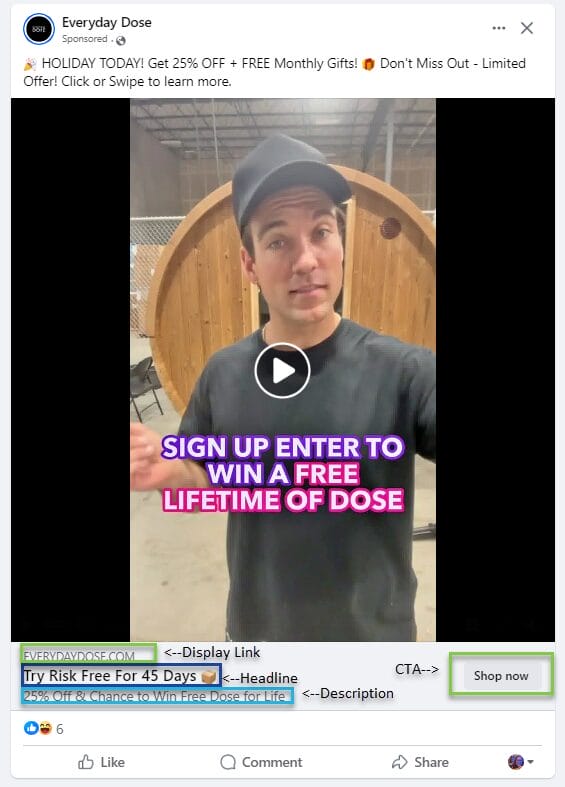
Also worth noting, the ability to control the display URL means advertisers are able to add tracking code to URLs without the link looking long and ugly to the viewer, like it would in a boosted post. This allows the advertiser to track the performance of ads within their own analytics platform, without negatively impacting the ad experience.
There is another type of ad available on Facebook, which is one that is created within Ad Manager. Ad Manager is separate from the Ad Center that’s available to all business pages. There are even more added layers of control when using Ad Manager, including advanced targeting, tracking, and budget options. Ad Manager is only recommended for experts.