Pay Per Click (PPC)
Instant Visibility, Tailored to Your Budget & KPIs.
Display your brand to high-intent prospects the moment your campaign is published. Highly measurable ROI and full budget control.

GET YOUR BRAND IN FRONT OF TARGET AUDIENCES QUICKLY WITH PPC ADVERTISING

Search Ads
Display Ads

Video Ads
Remarketing Ads
Native Ads
Want to quickly expand your company’s online visibility to those that you’re not yet reaching? Here’s how!
PPC Campaign Management Services
This FAST, highly targeted digital marketing strategy is ideal for ranking high on competitive keywords, boosting brand visibility quickly, and advertising seasonal products and services. Reach the coveted top of the list with expertly written ads, effective bidding strategies, and ROI-driven results.
Ads are served to your target market, with the ability to reach high-intent audiences based on demographics, interests, job titles, and more.
Types of PPC Advertising
Search Ads
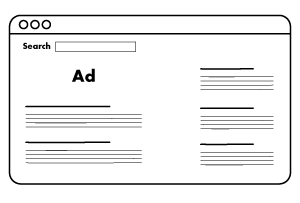
Search ads show in the sponsored content section
of search engine results pages, connecting your
brand with the people who are actively looking for information about your products or services. Our skilled PPC experts create compelling ad copy, callouts, extensions, and more that turn prospects into become qualified leads and customers.
Native Ads
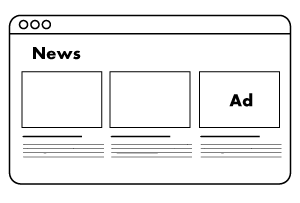
Native ads show on websites that have ads enabled. While they are technically display ads, native ads
more seamlessly blend in with the website’s content, appearing as recommended articles or in-feed posts. They offer a smooth, non-disruptive user experience, are deemed more credible by viewers, and lead to higher engagement rates.
Video Ads
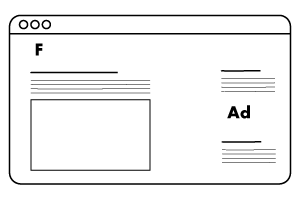
Video ads allow you to use eye-catching visuals and audio to quickly convey a message to potential customers who are watching other videos.
Video ads are available in a variety of lengths and formats, and are a great way to maximize brand exposure, since you only pay for clicks and engagements with your video.
Remarketing Ads
Remarketing ads can be created in all available ad formats, and target users who have previously engaged with your brand. By re-engaging potential customers who have shown interest, you move them down the conversion funnel. Ads can be customized based on how users interacted with your brand, making them more likely to convert.
Display Ads
Display ads show on websites and apps that have ads enabled. They can be targeted to your ideal audience based on interests, demographics, and much more. Display ads dynamically combine a variety of images, videos, headlines, and text. Or, you can use fully customized ad banners in a variety of aspect ratios. This is a great option for
creating brand awareness.
PPC Steps
1. Research to Reach Target Audience
We’ll find the keywords your customers are using to search for businesses like yours, and help you choose which platforms are best for your campaign (Google, Microsoft, Realize, and more)
2. Create Enticing Ad Copy & Imagery
We’ll create short, compelling ads with a clear call-to-action,
dazzling graphics, and compelling headlines that draw visitors to click on your ad and complete a
clearly defined goal – like purchasing a product, requesting a quote, or engaging with your website or app.
3. Analyze and Optimize
We embrace the journey because it’s where the magic happens. As performance data changes, we adjust keywords, ad content, bids, and targeting to improve ad quality, increase click through rates, and maximize ROI.
4. Results
We send you monthly custom reports showing the success of your PPC campaign management services, focusing on the KPIs you care about the most. Compare results with previous months, watch seasonal trends, and make informed decisions about where to spend your marketing budget.
Why Top Of The List for PPC?

Knowledge and Experience
Our PPC experts have over 20 years of experience managing effective PPC ad campaigns. We maintain relevant certifications and keep up to date with the latest features and strategies to provide optimal results that keep you ahead of your competitors.

Budget & ROI Maximization
PPC ads aren’t reserved for huge marketing budgets – but even with big budgets, every dollar should be spent wisely. We make the most of PPC budgets of all sizes, focusing on quality ads that lower cost
per click and maximize ROI.

Continuous Optimization
PPC Ad Campaigns shouldn’t simply be left to run on autopilot for months. We continually monitor and adjust your ads, targeting, and bidding strategies to ensure your PPC campaign is always relevant, competitive, and profitable.
Google Partner
Top Of The List is a Google Partner. This means we have met Google’s performance, spend, and certification requirements to attain partner status. These requirements are ongoing, so our knowledge and experience in Google Ads are always growing.
Paid Search FAQ
Paid search markets to users who are searching for your products or services by running paid ads on the search engines, or on other websites. Paid search is also sometimes referred to as PPC (pay per click), and SEM (search engine marketing).
Paid search works by creating ads and submitting them directly to the search engines you’d like to advertise on — most commonly, Google and Bing. You are then charged a fee when someone clicks on your ad. The exceptions to this are display ads and video ads, which are different formats of paid search ads.
Display ads are usually charged based on cost per 1,000 impressions (CPM), and video ads are typically charged for each view (CPV). Display ads often are shown on other sites related to your ad, or on news sites.
The cost to run ads on search engines depends on the selected bidding strategy, daily budget, and the quality of your ads.
Daily budget: all advertisers set a daily budget, which can be as little as $1.00/day. Regardless of what bidding strategy is selected, the amount of money you spend each month will never exceed the amount equal to your daily budget times the number of days that month. This means that ads may be paused once you reach your daily budget limit, or spaced throughout the day until the limit is reached.
Bidding strategy: bidding strategies tell the search engines how much you are willing to spend for people to view or click on your ad. Bidding strategies should be based on goals. Example goals include viewing an ad, clicking on an ad, completing a form, purchasing a product, subscribing to a YouTube channel, and so on. Based on your goal — and thus your bidding strategy — the search engines will charge based on either a set maximum amount per click or view, or a set maximum amount per conversion. There are other, more intricate bidding strategies, but the key is this: the search engines charge how much you are willing to pay for the interactions completed by potential customers.
Ad quality: the quality of an ad affects the cost of each ad interaction. Notice that when talking about bidding strategy, we said that charges are based on a maximum amount you are willing to pay? The cost of interaction with an ad is rarely what you set as the maximum. The higher the quality of your ads, keywords, and landing pages — known together as quality score — the more likely you are to pay less and have better ad positioning.
A note about automated bidding: Many bidding strategies use automated bidding and smart bidding, which automatically adjust bids using AI based on likelihood of the desired interaction. While this can lead to higher fluctuation in the cost per view or cost per interaction (and the placement of your ads), your cost will still never exceed what has been configured as your monthly budget.
At Top Of The List, search engine costs are charged directly to your credit card by the search engines. The cost of our PPC management services are invoiced to you monthly.
No. Paid search ads only display on the search engines where an advertiser is running ads, and if opted in, to their search network.
Companies typically choose to advertise on Google (via Google Ads) and Bing (via Microsoft Ad Manager), as those two search engines account for over 90% of searches performed worldwide.
Google’s search network partners include Ask.com, Dogpile.com, Lycos.com, Amazon, Walmart, and Target, as well as Google’s other sites like Google Maps, YouTube, etc.
Bing’s search network partners include Yahoo, AOL, and DuckDuckGo, as well as Microsoft’s other sites like MSN, Outlook.com, Edge, etc.
Your paid search ads will stop running as soon as:
- The ads are purposely paused in your portal, or
- The search engines attempt to process a payment but fail to receive it. This often happens when your credit card limits max out, or the card number or expiration date changes.
Search engine charge dates are based on your payment schedule (typically when you meet a payment threshold or at the end of a set time period).
We recommend pausing your ads as soon as you decide you no longer want to run — or pay for — PPC advertising.
When your ads stop running, the only way to appear on the search engine results page is through organic placement or map placement. This is why a multichannel digital marketing strategy is recommended for optimal search engine visibility.
There unfortunately isn’t much recent, large-scale data out there to answer this question. Here is what we know:
Statista data from 2020 shows that 64.82% of searchers were zero-click searches. These typically happen when people ask a question and get their answer directly on the results page without needing to click through to the website. If we disregard the zero click searches completely, about 4.5% of clicks were on ads, and 95.5% on organic search results.
Another study published on Statista shows that in 2022, the click-through rate for Google Ads ranged anywhere from 2.2% up to 16%, depending on the industry. However, we’re uncertain if this includes zero-click searches or not.
What we do know is that this number is constantly changing. The search engines are changing how ads look regularly, and searchers continue to change how they search and what they click on (or don’t click on).
Get your business in front of customers quickly by hiring the PPC experts at Top Of The List.
CONTACT US ABOUT PPC