In This Issue:
6 Blog Writing Guidelines for Better AI and SEO Visibility

Is your content ready for AI-driven search? With tools like ChatGPT and Google’s SGE shaping how users find answers, the rules for writing online are changing fast. From structuring content for AI visibility to formatting FAQs that land in AI responses, these six guidelines show you how to future-proof your SEO strategy. If you want your business to stay visible to both people and AI, this article is for you.
What’s New on Google’s SERP
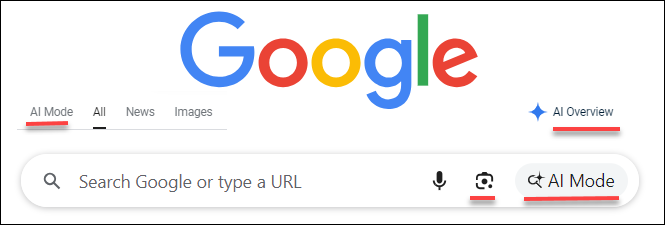
Google’s desktop search results are changing fast. AI is taking over the search landscape and its updates can dramatically impact the visibility of your business. Here are some of the latest changes:
- AI Overviews now lead the page, displaying immediate answers to queries along with subsequent site links. This section is primarily shown as a response to questions or for complex topics.
- AI Mode is a new link right in the Google search bar that links directly to AI, taking them away from the SERP. While the mode doesn’t provide a list of SEO results or ads (at least for the next few weeks?), it does use SEO results in its results.
- Rich Results are expanding, with multi-answer formats and carousels raising the competition.
- Agentic capability: Advanced search capabilities can respond to queries with multiple constraints: “seafood restaurant near me with outdoor seating and mid-range prices.”
- Visual elements carry more weight, including larger thumbnails, favicons, and image cards. AI is even adding its own charts and graphs into the mix.
- Local and shopping SERPs are richer, demanding updated Google Business Profiles and optimized product feeds.
- Visual search on mobile devices, “Search Live” lets you point your camera at an object and ask questions or click “Google Lens” to identify what you’re looking at. This is great for identifying plants and bushes you might want to later purchase, or learn more about a product you’re interested in buying.
Understanding the SERP’s continuous changes and what makes them tick is key to keeping your business visible and competitive in search.
5 Tips to Boost Your AI Visibility on Search Engines
AI is moving fast—faster than anything we’ve seen online before. So, how can your business keep up and stay visible? While there’s no crystal ball, there is a lot of solid advice coming out of the digital marketing world. Here are five simple ways to help your site show up in AI-generated results:
1. Be Active Everywhere
AI doesn’t just look at your website—it checks out your presence across the web. That includes platforms like Facebook, LinkedIn, X (formerly Twitter), TikTok, YouTube, Reddit, and more. If your audience is there, you should be too. A strong presence not only brings in direct traffic but also improves your chances of being cited in AI search results.
2. Follow E-E-A-T Guidelines
Experience, Expertise, Authoritativeness, and Trustworthiness. These have always been important for Google—and now they matter for AI, too. Make sure your content reflects these principles to stay relevant.
3. Use Quality Schema Markup
Schema markup helps AI understand your content better. While many website tools add basic schema automatically, it’s often not enough. Customized, strategic schema can give you a competitive edge—especially as AI continues to evolve.
4. Don’t Abandon SEO
AI still relies on top-ranking content from search engines. That means your site structure, headings, keyword optimization, internal/external links, and all the other classic SEO tactics still matter—a lot.
5. Make Your Content Deep and Detailed
A short blurb won’t cut it anymore. AI favors in-depth, comprehensive content. That means more details about your products or services—where they come from, how they’re made, why they’re valuable. You don’t need to give away trade secrets, but the more helpful info you provide, the better your chances of getting picked up.
Feeling overwhelmed? Let us handle it. We’re here to get your site to the Top Of The List—for AI and SEO alike.
Tip Of The Month
AI and natural: not oxymorons. For optimal AI visibility, your site needs natural, conversational content. This means including long-tail keywords and placing them naturally in your titles, headings, and first paragraphs. Think about how you would answer a customer’s questions about your product or service. Your content should answer those questions and be clearly supported by examples and lists.
Just For Laughs
An AI walks into a bar and orders a drink.
The bartender says, “Sorry, we don’t serve robots.”
The AI replies, “Oh, but I can think and feel. I passed the Turing Test.”

The bartender leans in and asks, “Okay, then tell me, what does regret feel like?”
The AI responds, “It feels like being given a captcha every time I try to log into my o